This Starbucks was 3D printed in 2025 In Brownsville Texas
Approximately 90% of the homes built in the United States are made out of wood. We’ve been building this way for 200 years
But this kind of 3D printing creates a concrete wall which has many advantages such as faster construction, less labor, earthquake resistant, fire resistant, pest resistant, energy efficient. a technology like this might be really good for fire prone areas in the West Coast
I have built 2 homes in Ojai out of concrete.
Call me to talk house! Otis Bradley Otis Bradley Company, Inc. OtisBradley.com
This is a conceptual design, The Wave House, for the remodel of an exiting home. The existing home is about 2000 SF, outdated and in a neighborhood that has become very expensive. This is a radical idea to create a unique beach home with a nod to traditional style as well
This is a house designed several years ago for Ojai, California. It’s important to note that this is a hot dry climate in a wildfire area.
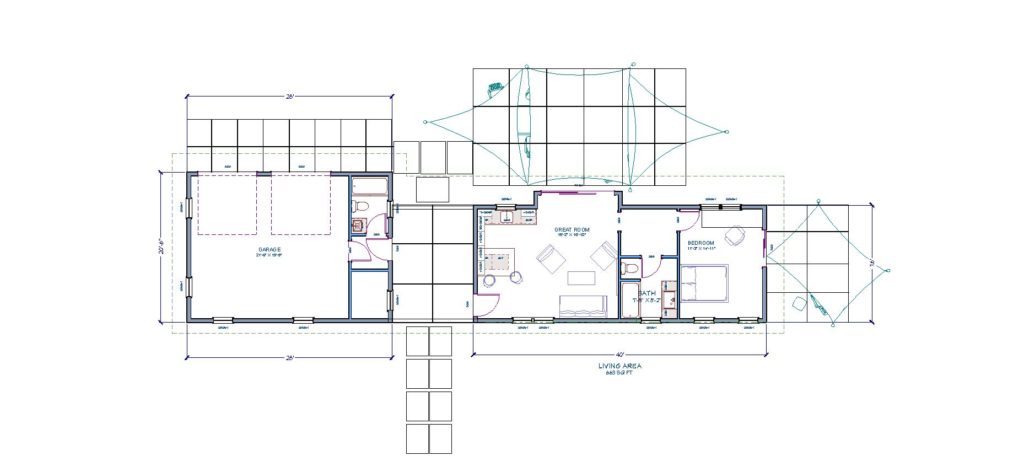
Part of the objective was to design a simple, efficient, easy to build home that takes some lessons from prefabricated homes. I often meet with people who are interested in the idea of prefabricated homes only to find out that it’s not always the best solution. For several reasons, including prefabricated homes are not designed site specifically and they are very difficult to change from the standard format. so this exercise was to design something that could be built in this area on a lot facing south with the advantage of being simple and inexpensive to build.
The house faces south and has a large overhanging roof which shades the property. This is passive solar design. Additionally the house would have a solar array on the south-facing roof on top. The house is built with a concrete slab on grade design and standard “stick” or wood frame which is the standard in most of the USA. The concrete is also the finished floor. The outdoors is used ase outdoor living area. The garage, a building code requirement at the time, is intended to be used as a studio or guest room instead of an actual garage.
Check out the build of this beautiful contemporary, Spanish style home. This is new construction from the ground up. The old small house was removed to build this one.
The “Skinny House” is an idea taken from looking at various pre-fab homes, in particular the high concept, prefabricated Glide House, designed by Michelle Kaufmann. Working with clients over the years, many had seen interesting prefabricated homes in Dwell Magazine and other online architectural place. The idea of having a home built in a factory – better working conditions – better quality – cheaper prices etc – is a hot appeal.
The Glide House
The plan below is an idea that uses many of the concepts of a prefabricated home but a bit bigger and using the garage as a “flex space.” Many people prefer using their garage as a studio, office or other use.
One of the ideas of the “Skinny House” is to incorporate outdoors living space.
Keep construction simple to keep costs down … simple but elegant!
Incorporate solar power …
Often times, after researching the true costs with infrastructure, foundations etc, the actual costs of prefabricated homes are the same or more than building the home on site. A site built home design has much more freedom to be “tweaked” to fit the site. Many options, levels of quality and design exist, but most prefabricated homes are based on components – usually 16 feet wide – that can be transported by truck.
Below – some additional ideas for floor plans.
Prefabricated home companies have been around for years. You mostly know them as trailer park homes. Many of these companies have not evolved past the ugly boxy designs you have seen. A bunch of new companies have come and gone such as Michelle Kaufmann’s Glidehouse. It seems to be – so far – a serious challenge to create the “iHouse” design for homes. A design that works everywhere – works well – is priced well and deliverable everywhere.
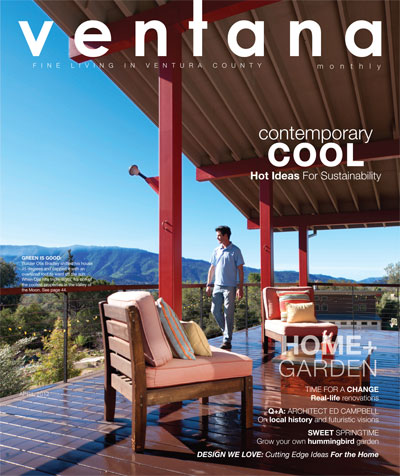
The exposed structural steel and beams are painted in Frank Lloyd Wright’s Cherokee Red.
By Andrea Kitay—Photography by Gaszton Gal
Casa Verde, the two-acre Ojai spread that Otis Bradley and his family call home, is more than a play on words. Its name is a nod to the custom homebuilder’s passion for efficiency. The 3400-square-foot contemporary completed in 2008 is a result of Bradley’s determination to build an ecologically sound home, in keeping with his family’s laidback lifestyle.